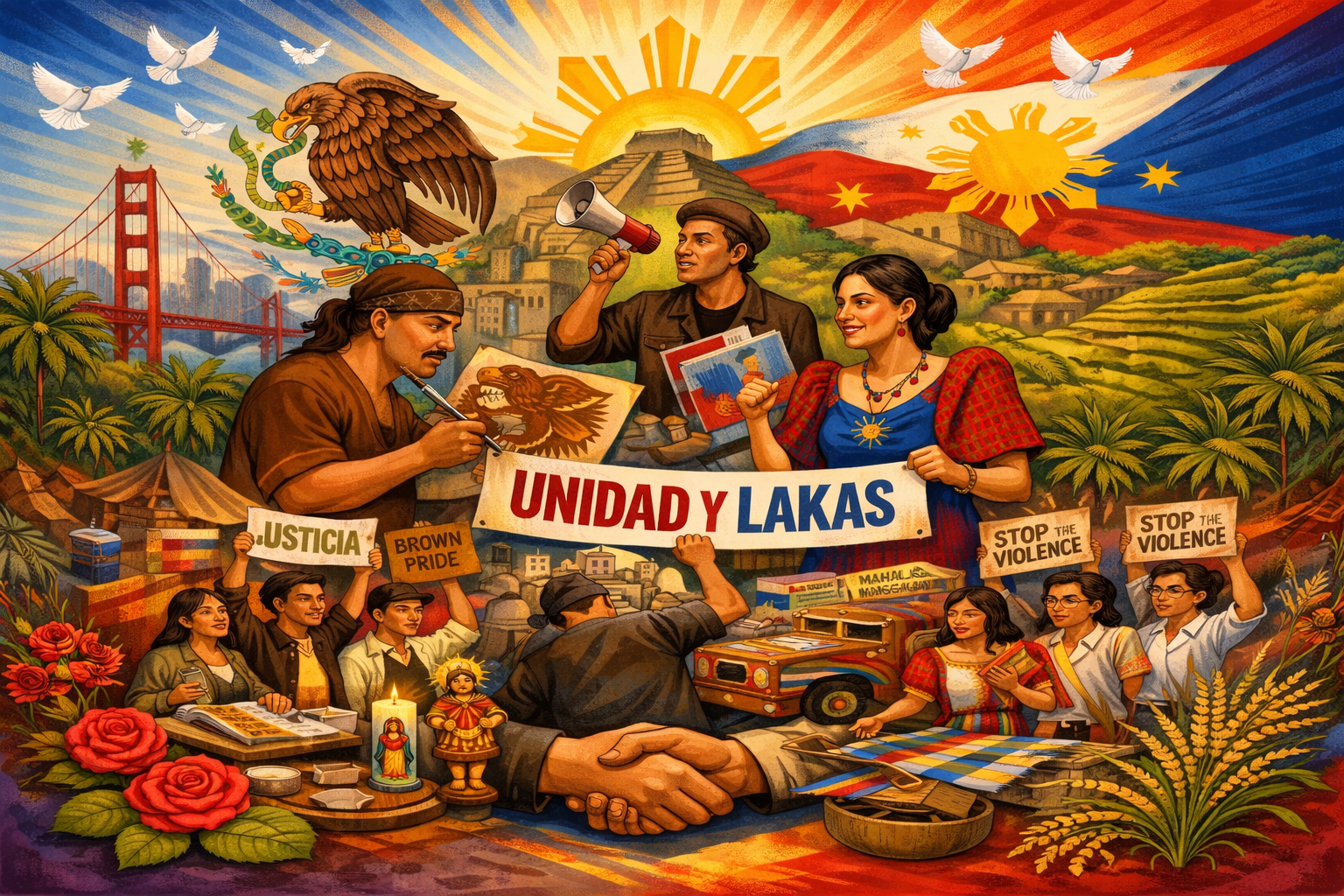
California has long been a melting pot of diverse cultures, blending traditions, identities, and histories into a rich tapestry of shared experiences. Among these, the Chicano and Filipino communities hold a unique place, each with deep roots in California’s history. Both groups have faced struggles tied to systemic inequality and fought for rights through collective movements. Today, their intersections foster solidarity, artistic innovation, and social justice initiatives that inspire change far beyond their immediate circles.
Shared Histories and Labor Movements
Historically, Chicanos and Filipinos have stood shoulder-to-shoulder in labor movements, particularly in California’s farmworker battles. The Delano Grape Strike of 1965 was a pivotal moment in this shared history. It united Filipino labor leaders like Larry Itliong and the Agricultural Workers Organizing Committee (AWOC) with César Chávez, Dolores Huerta, and the National Farm Workers Association (NFWA), representing Chicano laborers. This collaboration formed the United Farm Workers (UFW), a groundbreaking union that championed workers’ rights across ethnic lines.
This historical bond serves as a foundation for current partnerships between the two communities. For example, organizations like the Pilipino Workers Center in Los Angeles continue to advocate for workers’ rights while honoring the legacy of interethnic solidarity established decades ago.
Transitioning from common struggles to shared victories, this relationship highlights how building coalition improves outcomes—a vital lesson for all social justice efforts.
Artistic Collaborations as a Bridge
Art has emerged as another powerful medium for exchange and solidarity. Murals, poetry, music, and theater have expressed the intertwined stories of the Chicano and Filipino experience. For instance, mural artists have depicted historical events such as the Delano Grape Strike, integrating Filipino and Chicano imagery to honor their collective legacy.
Additionally, hip-hop culture, rooted in resistance and storytelling, has become a platform where Filipino and Chicano youth collaborate on addressing contemporary issues. Artists like Ruby Ibarra and Chicano musicians have used their voices to uplift marginalized communities, blending linguistic and cultural elements for broader appeal.
Community art projects such as Unity Through Murals in San Francisco demonstrate how collaborative art strengthens solidarity while showcasing the distinct yet harmonious identities of both groups.
Civic Initiatives for Empowerment
Beyond art and labor, Chicano and Filipino communities in California work together in civic initiatives to address shared challenges like racial inequality, housing insecurity, and immigration reform. Organizations such as the Alliance of Filipinos for Immigrant Rights and Empowerment (AFIRE) and local Chicano community groups collaborate in lobbying for inclusive policies at the state and national levels.
Recent partnerships have focused on combating anti-Asian hate crimes while addressing broader systemic racism. Events designed to foster understanding, like cultural exchange workshops or community forums, create spaces for dialogue and collective action. By empowering marginalized voices through education and advocacy, these initiatives help to dismantle barriers and effect meaningful change.
The Strength of Cross-Cultural Solidarity
The collaboration between Chicano and Filipino communities is more than just a partnership—it is a testament to the strength of shared struggle and mutual respect. Both groups bring rich histories, cultural knowledge, and resilience to the table. By working together, they amplify their voices and extend their reach to create a stronger, interconnected network of change.
This cross-cultural exchange also sets an example for other communities seeking solidarity. It demonstrates that unity does not require erasing individual identities but rather celebrating unique contributions and shared goals. Together, these partnerships foster a deeper understanding of social justice and how interconnectedness strengthens broader liberation movements.
Keep Our Culture Alive
Chicano culture thrives when we share, explore, and celebrate it together. Whether through art, language, history, or everyday experiences, we each play a part in preserving our heritage. Join the movement—learn about our stories, uplift our voices, and pass on the traditions that shape who we are. Together, let’s keep Chicano identity strong for future generations.