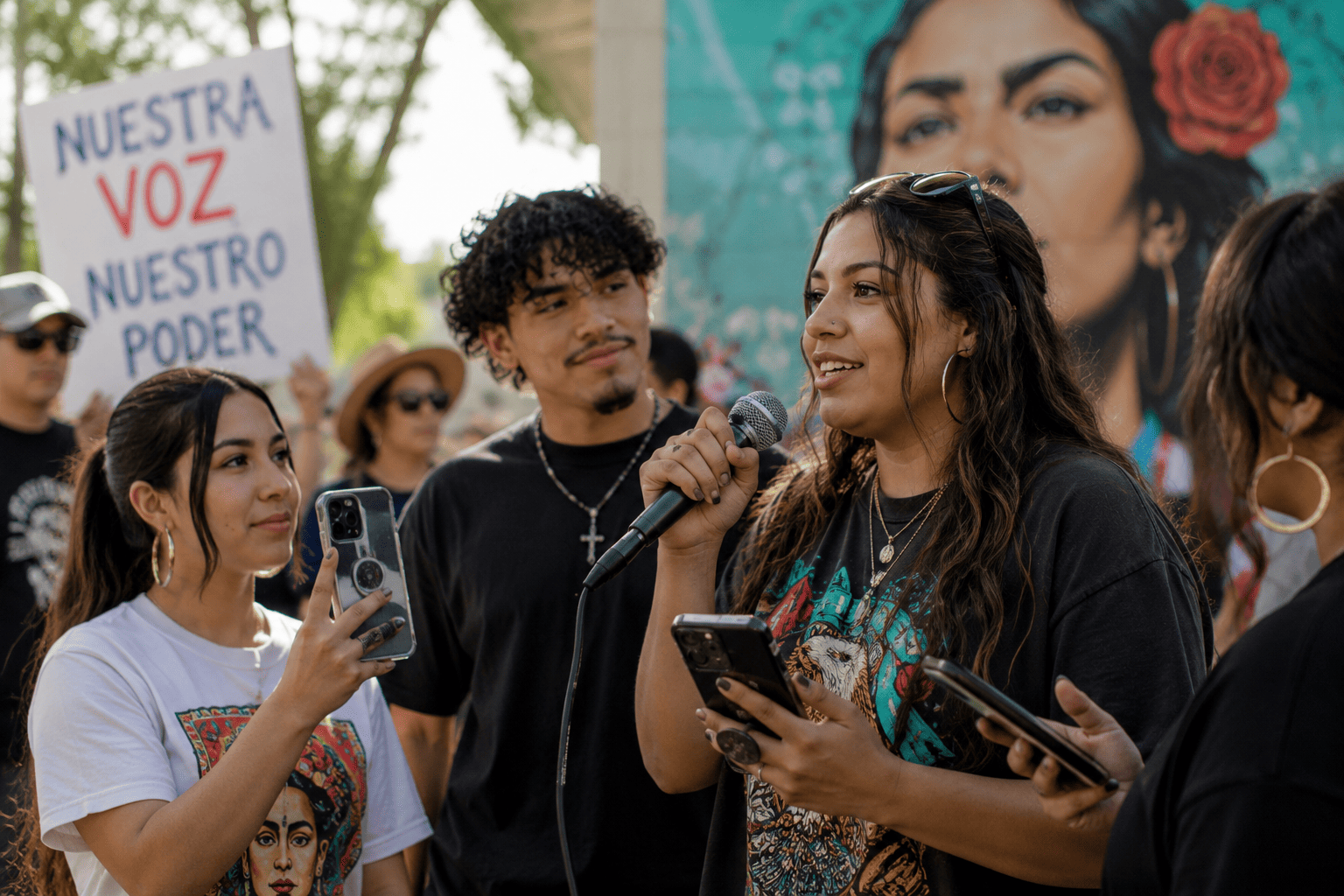
Chicano Gen Z activism is reshaping how younger generations express cultural pride, organize for change, and connect local issues to broader conversations. This generation is engaging with identity and justice in ways that are deeply personal, highly visible, and often digitally driven.
What makes this moment important is not only the energy behind it, but the way young people are blending history, creativity, and community responsibility into new forms of activism.
Digital Spaces Have Expanded the Conversation
Gen Z often uses digital platforms as a first point of connection, education, and mobilization. Social media, short-form video, and online community spaces allow ideas to travel quickly and give young people new tools for storytelling and advocacy.
That visibility can help amplify issues tied to identity, education, representation, and social justice. It also gives younger activists room to share cultural perspective in their own voice.
Cultural Pride Is Central to the Message
For many young Chicano voices, activism is not separated from culture. Language, family history, art, and lived experience are part of how they understand justice and belonging. This creates a form of activism that feels rooted rather than abstract.
Instead of leaving heritage in the background, many Gen Z organizers place it at the center. That shift reinforces the idea that cultural identity itself can be a source of strength and political awareness.
Intersectionality Shapes New Priorities
Younger activists often speak about overlapping experiences tied to race, class, gender, education, and community access. That broader lens helps explain why their organizing style can feel more interconnected than earlier models.
A Different Model of Leadership Is Emerging
Chicano Gen Z activism often values collaboration, visibility, and community dialogue over rigid top-down leadership. Young people are creating spaces where activism includes art, mutual support, education, and public expression alongside advocacy.
That does not mean earlier movements are being replaced. In many cases, younger activists are reinterpreting longstanding values through current tools and current realities.
The Next Chapter Is Already Taking Shape
Youth voices are rising because younger generations are refusing to treat culture and justice as separate conversations. They are building new pathways for engagement while honoring the struggles that came before them.
As Chicano Gen Z continues to redefine activism, their influence will likely be felt not only online, but in schools, neighborhoods, art spaces, and community movements for years to come.
Keep Our Culture Alive
Chicano culture thrives when we share, explore, and celebrate it together. Whether through art, language, history, or everyday experiences, we each play a part in preserving our heritage. Join the movement—learn about our stories, uplift our voices, and pass on the traditions that shape who we are. Together, let’s keep Chicano identity strong for future generations.