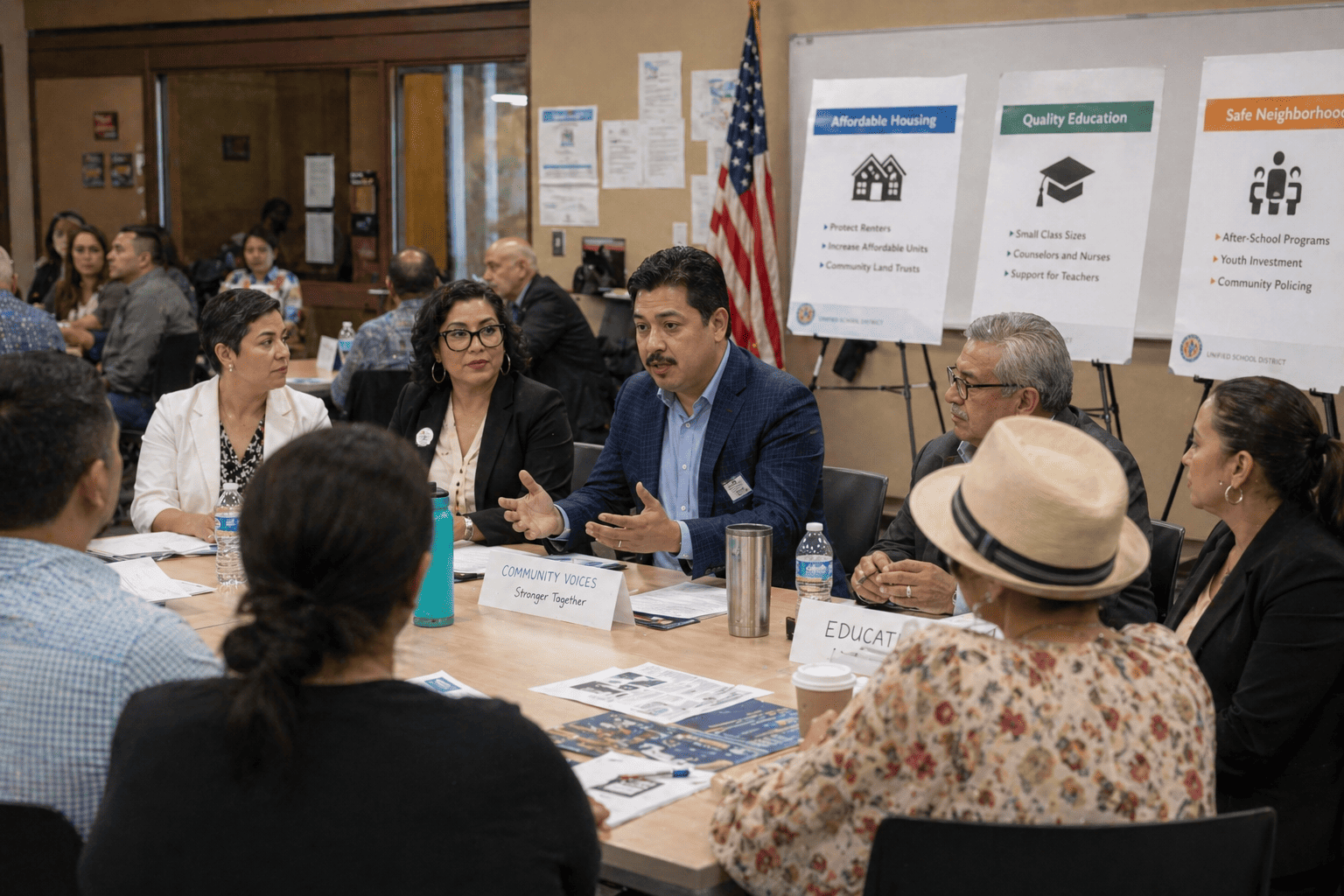
Chicano public policy influence can be seen across California in the way local leaders, educators, organizers, and public servants shape decisions that affect everyday life. From school systems to housing discussions, Chicano voices continue to help define what representation, equity, and community accountability look like in practice.
This influence is not limited to one office or one generation. It grows through sustained civic participation, cultural memory, and a commitment to making institutions respond more directly to the communities they serve.
Why Local Leadership Matters
Public policy is often experienced most clearly at the local level. School boards, city councils, planning commissions, and community organizations help shape the services, rules, and priorities that residents feel every day. When Chicano leaders hold space in those settings, they bring perspectives rooted in lived experience, community history, and ongoing advocacy.
That representation can help policy conversations become more responsive to families whose needs have historically been overlooked or simplified.
Influence in Education
Cultural Representation in Schools
Chicano leadership has helped push education conversations toward greater inclusion of history, identity, and community-centered learning. These efforts support the idea that students benefit when they see their experiences and heritage reflected in educational spaces.
Access and Opportunity
Education policy also includes questions about resources, support systems, and equitable access. Chicano advocates and leaders often work to make sure those discussions reflect the realities of working families, multilingual communities, and students navigating structural barriers.
Influence in Housing and Equity
Housing policy affects stability, neighborhood identity, and long-term opportunity. Chicano voices in public leadership can help frame housing debates around fairness, community continuity, and the need to protect residents from being pushed out of the places they helped build.
Broader equity work often follows the same pattern. It asks public institutions to examine who is being heard, who is being served, and where policy outcomes still fall short.
Building a Stronger Civic Future
As more Chicano leaders participate in local and state decision-making, California gains a stronger connection between public policy and the communities those policies affect. That influence is not only about office-holding. It is also about mentorship, organizing, education, and the continued belief that civic leadership should reflect the people it represents.
Recognizing this role helps younger generations see public service as part of cultural continuity as well as community change. In that way, leadership becomes another way Chicano identity remains active, visible, and future-facing.
Keep Our Culture Alive
Chicano culture thrives when we share, explore, and celebrate it together. Whether through art, language, history, or everyday experiences, we each play a part in preserving our heritage. Join the movement—learn about our stories, uplift our voices, and pass on the traditions that shape who we are. Together, let’s keep Chicano identity strong for future generations.